
April 2026 Writen by Amy Davies
Washed - The Purified Heart

Welcome to Flourish, starting afresh with our new series on Water. Water is important to God - according to Google, water is mentioned 722 times in the Bible, frequently highlighting its significance as a symbol of life, purity and cleansing. Throughout God’s Word we see water used as a powerful force - from the great flood in Genesis to the raging seas of the storms on Lake Galilee. We experience it as an image of God’s perfect provision, as Moses follows God’s command to strike a rock with his staff to produce a fresh flow of water for the complaining Israelites to drink whilst they journey through the wilderness. We find water at the centre of the miraculous, as Jesus transforms it into choice wine at a wedding feast in Cana. From Jesus’ baptism in the Jordan River to His encounter with a man at the pools of Bethesda, water is around every corner, Old Testament to New.
Inspired by the story of the Woman at the Well, over the coming months we will explore some of these key passages, drawing life, hope and faith from the truth of how we are Washed, Seen, Refreshed and Sent - Overflowing with Living Water from Jesus, our Source.
Washed Clean
Today we consider what it is to be Washed. We all know the joy of physical washing, feeling cleansed by the rushing water of a shower, relaxed by a soak in a hot bath or perhaps refreshed by cold water splashing across our face. Water invites us to become clean, to awaken us to a new day, or unwind after a long, busy one!

Bible verses about washing often focus on the concept of spiritual purification, cleansing from sin, more of an inward heart sanctification than outward hygiene - “You were washed, you were sanctified, you were justified in the name of the Lord Jesus Christ and by the Spirit of God.” 1 Corinthians 6:11.
In the Old Testament, washing was seen as a ritual requirement for purity, a form of preparation to meet God. It was a big deal! The Levitical Law given by God to the Israelites was full of instructions for washing and reasons for uncleanliness - contact with the dead, bodily emissions, childbirth, preparing and eating particular foods - each resulting in the need to bathe and/or wash garments to be cleansed. Ceremonial cleanliness was deemed essential for approaching God in worship. Priests had intense cleansing rituals, particularly on the Day of Atonement. The consequences for not following these rules were severe, with a focus on maintaining the holiness of the Israelite community. Failure to do so could result in temporary separation from the camp and exclusion from sacred activities.
These purification laws were immense, and left many isolated through no fault of their own, including menstruating women and those with skin conditions, often referred to as leprosy. Leprosy, in those days, was a highly contagious and incurable disease, leading to social isolation, expulsion from the camp, loss of social status and identity.
The Struggle Within
One man in the Bible experiencing this awful disease was Naaman, who we find in 2 Kings 5. Whilst Naaman was a Syrian gentile, rather than an Israelite, the condition still threatened to diminish his position and effectiveness in his role as commander of King Aram’s army.
2 Kings 5:1 tells us “He was a valiant soldier, but he had leprosy.” I wonder how many of us have a but in our life - ‘She was a successful business woman, but then came the redundancy.’ ‘She was a wonderful mother, but then she got sick.’ ‘She was a faithful wife, but then he left her.’ Everybody has at least one but in their lives. However, perhaps a better way to look at our misfortunes is with a but GOD. ‘She was made redundant, but GOD provided.’ ‘She got sick, but GOD gave her strength.’ ‘He left her, but GOD remained.’
Naaman’s leprosy would have caused great distress, so when offered hope of healing through the faith of a captured slave girl, Naaman jumped at the chance, seeking permission from the King to go to Samaria to visit the King of Israel. Interestingly, he went laden with expensive gifts, as though expecting to pay for his healing. I wonder how often we get caught up in the trap of performance, perhaps believing the lie that we need to somehow measure up and earn our way to receive a touch from Heaven. The good news is, God’s salvation is free to those who have the faith to believe; a gracious, merciful gift to those with humble hearts seeking to repent and turn away from their sin.
To cut a long story short, the King could not heal Naaman, and was outraged by the concept, however the prophet Elisha suggested that he could be of service. Skip ahead to 2 Kings 5:9 and here we find Naaman as he arrives at Elisha’s door:
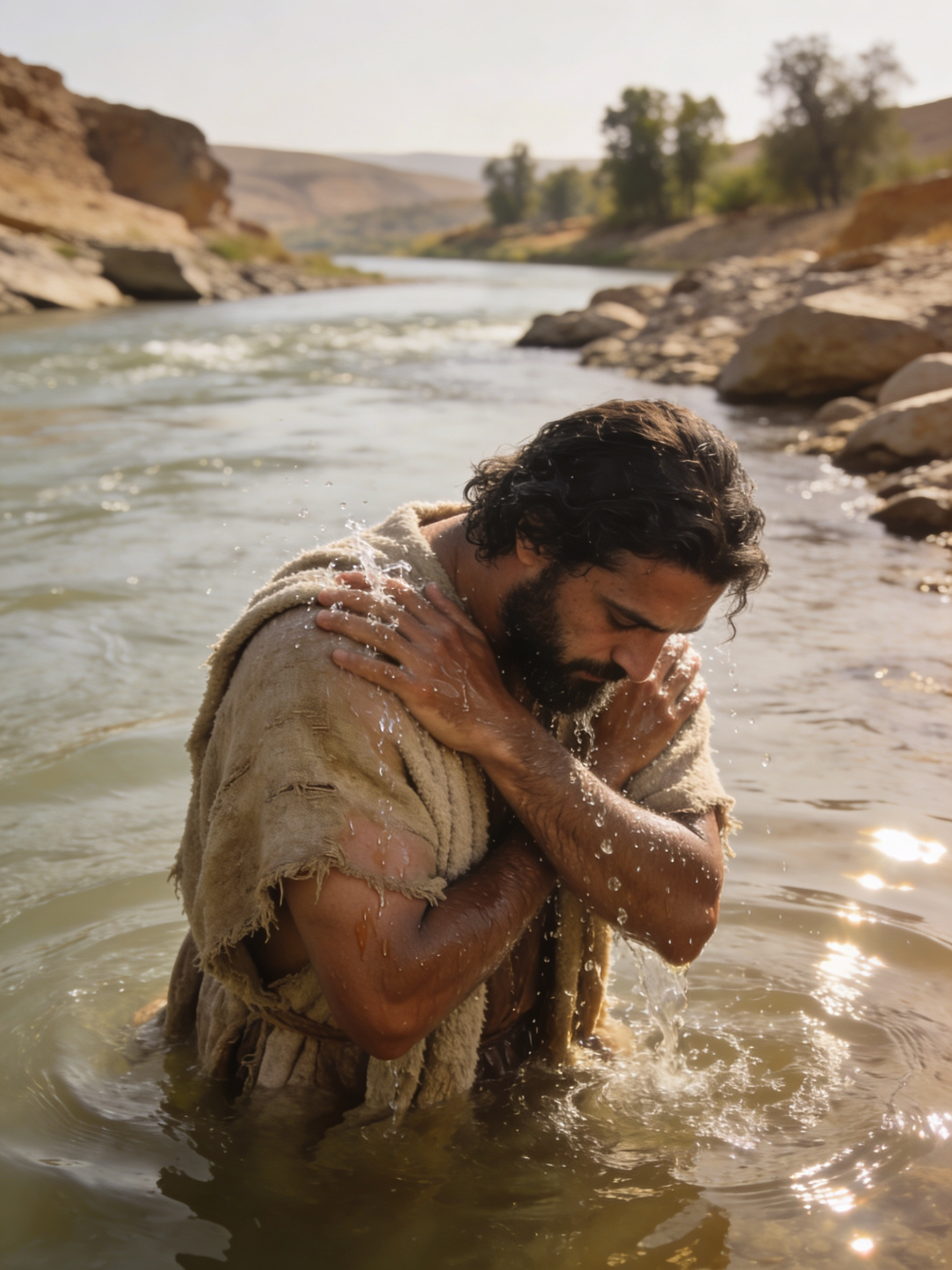
“So Naaman went with his horses and chariots and stopped at the door of Elisha’s house. Elisha sent a messenger to say to him, “Go, wash yourself seven times in the Jordan, and your flesh will be restored and you will be cleansed.”

Poor Naaman was struggling with a sense of entitlement and pride. How could Elisha be so dismissive of such a high ranking commander? Surely he would have had the decency to come out and meet him? Naaman expected royal treatment from the man himself. He was proud - to wash in a river was bad enough, but the River Jordan! That was too beneath him, how would his skin be cleansed in a small, dirty river? Damascus had far better rivers to offer! The notion was ridiculous, and he was having none of it, storming off enraged, forgetting his desperate need for help.
I’m sure we’ve all had an encounter with pride at some time in our lives. Rated ourselves too highly, classed ourselves too important to do that job, too high on the social ladder to be seen talking to them. Superior to those beneath us, head high in the clouds. Perhaps we’ve cast judgement on others, never having been in their situation, or patronised those of lower class, looking down our noses. Pride is a sin that none of us are immune to, yet it’s what we choose to do with it that matters. Do we stay where we are, or do we humble ourselves, remembering we serve a Lord far higher than we could ever be?
It took Naaman’s servants to bring him back to reality, enabling him to step down from his high horse and humble himself to submission. As they rightly point out in 2 Kings 5:13:

Humble Obedience
Sure enough, when Naaman came to his senses and obeyed Elisha’s simple instruction, he was immediately healed - flesh restored and clean.
How often do we delay obeying God because we feel like the instruction is too simple, misaligned with our lofty expectations? Dreaming big is great, but sometimes it’s necessary to start small, taking one step at the bottom of the ladder. The Bible teaches it is faithfulness in the small things that lead to greater (Luke 16:10).
I love the story of Naaman as it offers hope to us all. God does not have favourites. He offers an open invitation to each of us, whatever race or creed, male or female, young or old, Jew or Gentile. Despite his high status, Naaman was no different to the ten lepers Jesus instructed to show themselves to the priests in Luke 17. A simple instruction, requiring an act of faith. So come as you are, for all are welcome, none exempt from His miraculous cleansing power.
As we draw to a close, I’m struck by how God did a deeper work in Naaman that day. Washing in the river didn’t simply cleanse his skin, but his heart too. It takes humility to obey God. It involves accepting that His ways are higher than ours, that His hand is greater. Even when we don’t see it or cannot understand it, when we humbly submit to His plans above our own, we will receive His blessings. Naaman came to know the one true God, there’s no greater gift!
Naaman could have continued in his pride that day, expecting a heroic healing to match his position, and he would have missed the miracle. Many hear and reject the matchless offer of Christ by the nature of its complex simplicity, believe and receive. How can that be so? Yet rather than fight it, or recreate it through legalism, isn’t it better to simply accept with open arms and a heart full of thanks? The Creator of the Universe invites us here and now - ‘Wash and be cleansed’. Let’s not miss the miracle Jesus is offering in our own lives today.